What is Ear Wax? A Definitive Guide to Understanding Cerumen
Ear wax — that sticky, sometimes bothersome substance — is actually one of your body's most underrated protectors. Known medically as cerumen (pronounced 'seh-ROO-muhn'), this waxy secretion plays a crucial role in maintaining ear health, yet it remains widely misunderstood.
According to the American Academy of Otolaryngology–Head and Neck Surgery (AAO-HNS), approximately 12 million Americans seek medical care for impacted or excessive earwax each year, leading to nearly 8 million professional removal procedures. Understanding what ear wax is, why your body produces it, and when it becomes problematic can help you maintain optimal ear health and avoid common mistakes that lead to complications.
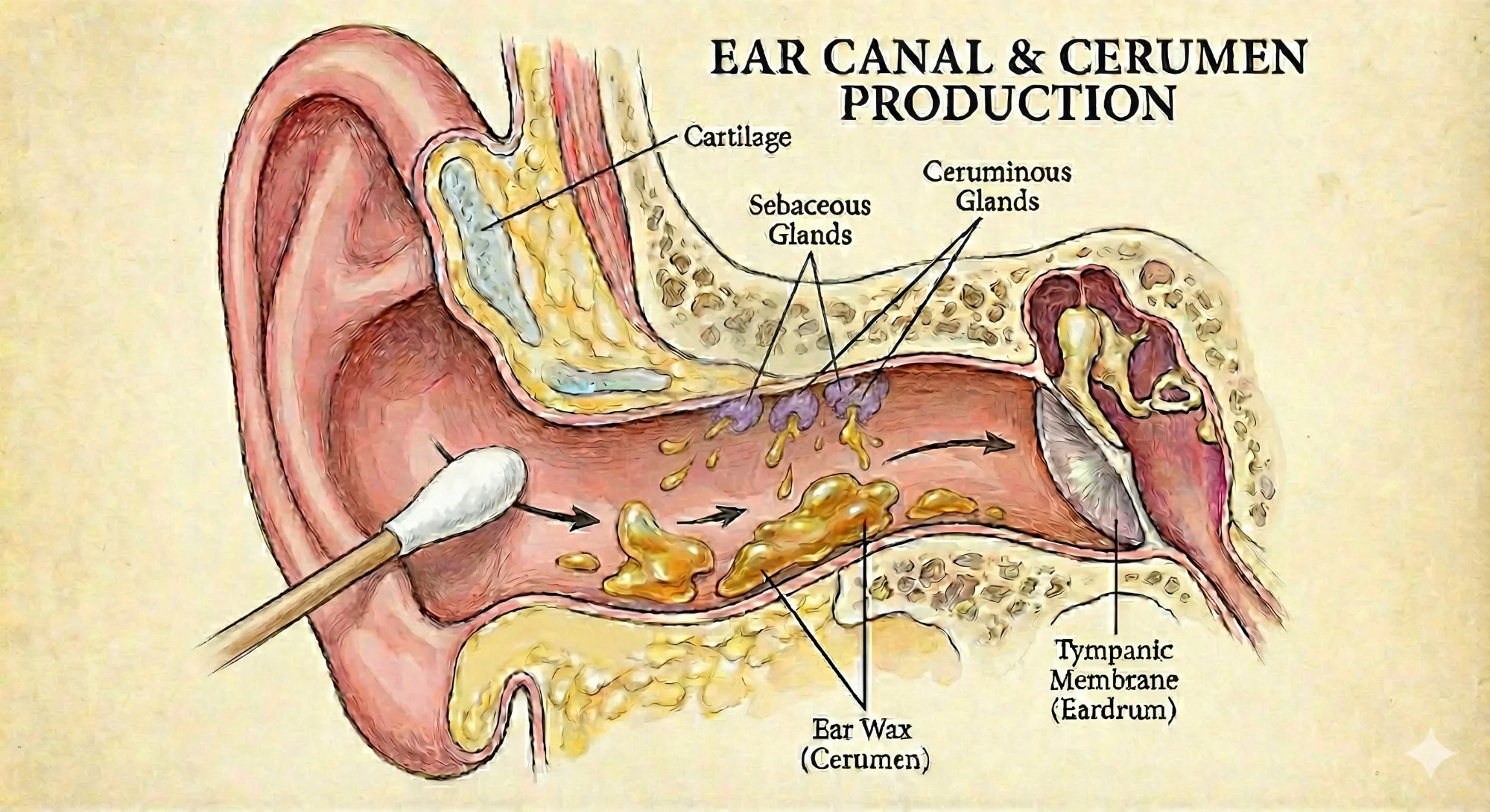
Anatomical diagram showing ear wax (cerumen) production in the ear canal
What Exactly is Ear Wax?
Ear wax is a natural substance produced by specialized glands located in the outer third of your ear canal. Despite its name, it isn't actually 'wax' in the traditional sense — it's a complex mixture of secretions designed to protect your ears.
The Composition of Cerumen
Your ear wax is made up of several key components, each serving a specific purpose:
| Component | Percentage/Description | Function |
|---|---|---|
| Keratin | Up to 60% | The same protein found in your hair and nails |
| Long-chain fatty acids | 12-20% | Providing antibacterial properties |
| Cholesterol and squalene | 6-9% | Contributing to the waxy texture |
| Dead skin cells and hair | Variable | Trapped during the natural migration process |
| Sebum | Variable | An oily substance that provides lubrication |
This unique composition gives ear wax its characteristic slightly acidic pH of around 6.1, which creates an environment hostile to bacteria and fungi. Research published in the Journal of Proteome Research has identified over 2,000 proteins in human cerumen, highlighting its complexity as a diagnostic biofluid.
Why Does Your Body Produce Ear Wax?
Far from being a nuisance, ear wax performs several essential protective functions:
1. Protection Against Infection
The antimicrobial properties of ear wax come from its saturated fatty acids, lysozyme (an enzyme that destroys bacterial cell walls), and its acidic environment. Studies have shown that cerumen can inhibit the growth of bacteria and fungi that might otherwise cause ear infections.
2. Physical Barrier
The sticky nature of ear wax traps dust, dirt, pollen, and small insects before they can reach your sensitive eardrum. This protective barrier prevents foreign particles from causing irritation or damage to the delicate structures of your inner ear.
3. Lubrication and Moisturization
Your ear canal is lined with sensitive skin that can become dry and itchy without proper lubrication. Ear wax keeps this skin supple and comfortable, preventing the cracking and irritation that can lead to infection.
4. Self-Cleaning Mechanism
Perhaps most remarkably, ear wax facilitates your ear's natural self-cleaning process. The skin of your ear canal grows outward from the eardrum (like a conveyor belt), carrying old wax and trapped debris towards the ear opening. This process is aided by jaw movements when you chew or talk.
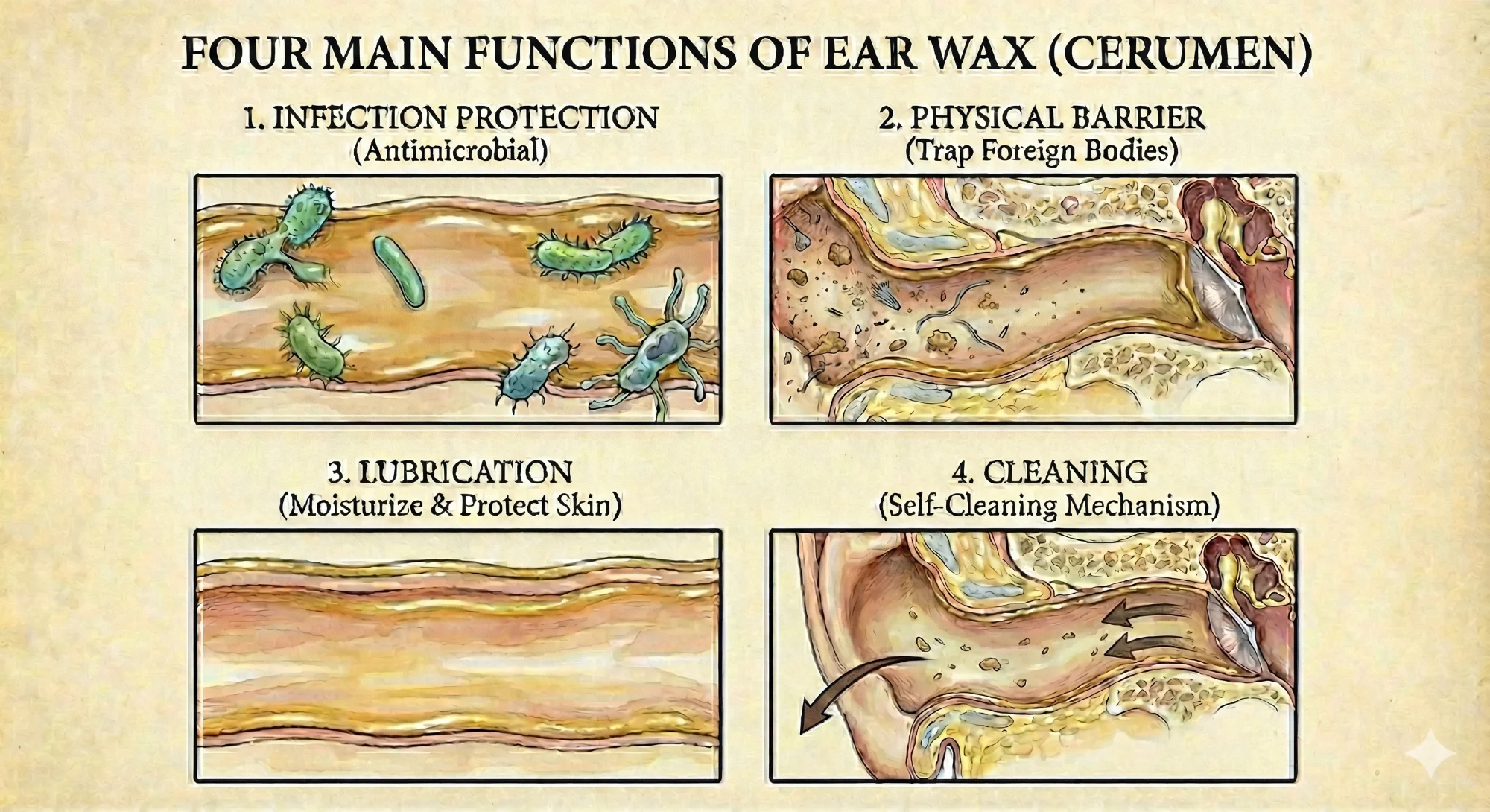
Infographic illustrating the four key functions of ear wax: infection protection, physical barrier, lubrication, and self-cleaning
The Two Types of Ear Wax
Not all ear wax is the same. Genetics determine which of two distinct types you produce, and this is linked to a single gene called ABCC11:
| Wet Ear Wax | Dry Ear Wax |
|---|---|
| Appearance: Yellow to dark brown, sticky and moist | Appearance: Gray to tan, flaky and crumbly |
| Lipid content: ~50% | Lipid content: ~18% |
| Prevalence: Common in European, African, and Hispanic Americans | Prevalence: Common in East Asian and Native American populations |
| Self-clearing: Usually clears naturally | Self-clearing: Higher risk of blockage |
Your ear wax type can also change with age — older adults often produce harder, drier wax that is more prone to impaction.
When Ear Wax Becomes Problematic
While ear wax is beneficial, problems arise when the natural self-cleaning mechanism fails. According to a 2024 study published in Laryngoscope Investigative Otolaryngology, impacted ear wax affects approximately 18.6% of Americans aged 12 and older — and that number rises to 32.4% for adults over 70. The AAO-HNS reports that impacted cerumen is present in 1 in 10 children, 1 in 20 adults, and more than one-third of the elderly and developmentally delayed populations.
Signs of Ear Wax Build-up
You may have excessive ear wax if you experience:
- Muffled or reduced hearing
- A sensation of fullness or pressure in the ear
- Earache or discomfort
- Tinnitus (ringing or buzzing sounds)
- Itchiness in the ear canal
- Dizziness or vertigo (in severe cases)
Risk Factors for Impaction
Certain factors increase your likelihood of developing impacted ear wax:
- Using cotton swabs or inserting objects into the ear canal
- Wearing hearing aids or earbuds regularly
- Having narrow or hairy ear canals
- Age-related changes in wax consistency
- Skin conditions such as eczema or psoriasis
- Anatomical differences, including those associated with Down syndrome
Recommended Video: Understanding Ear Wax
For a helpful visual overview of ear wax and its important role in ear health, we recommend this informative TED-Ed talk by Henry C. Ou: "What is earwax — and should you get rid of it?"
This engaging animated video explains the science behind cerumen production, its protective functions, and addresses common misconceptions about ear wax removal. It's an excellent educational resource that complements the information in this guide.
The Cotton Swab Danger: Why You Should Never Clean Your Ears This Way
Despite manufacturers' warnings printed on every box, surveys show that approximately 68% of people admit to using cotton swabs (Q-tips) in their ears, with 76% of users doing so at least weekly. This practice is one of the leading causes of ear problems seen by ENT specialists across the United States.
Cotton swabs cause harm in several ways: they push wax deeper into the ear canal rather than removing it, they can scratch the delicate skin of the ear canal leading to infection, they may perforate the eardrum, and they can leave cotton fibers behind that become a source of infection. Research shows that cotton-swab-related injuries are the most common cause of accidental penetrating ear injury in children.
AAO-HNS CLINICAL GUIDELINES
"Don't put anything smaller than your elbow in your ear. Cotton swabs, hair pins, car keys, toothpicks... these can all injure your ear and may cause a laceration in the ear canal, a perforation of the eardrum, and/or dislocation of the hearing bones, leading to hearing loss, dizziness, ringing, and other symptoms of ear injury."
Source: American Academy of Otolaryngology – Head and Neck Surgery
Safe Ear Wax Removal Methods
If you're experiencing symptoms of ear wax build-up, there are safe approaches to consider:
Home Care (First-Line Treatment)
The AAO-HNS recommends starting with cerumenolytic (wax-softening) agents. Lie on your side with the affected ear facing up and apply a few drops of mineral oil, baby oil, glycerin, or over-the-counter ear drops. Remain lying for 5-10 minutes, then repeat 2-3 times daily for several days. Softened wax often falls out naturally. Commercial ear drops containing carbamide peroxide (such as Debrox) are also widely available at pharmacies.
Professional Removal Methods
Microsuction (Gold Standard)
This method uses a small vacuum device to gently suction wax from the ear canal under direct microscopic vision. It is quick, safe, and suitable for patients with perforated eardrums or previous ear surgery. This is the technique we use at Cera Ear Clinic in Chicago, and it's preferred by ENT specialists nationwide.
Ear Irrigation
Using controlled water pressure to flush out wax, this method can be effective when a cerumenolytic is applied 15-30 minutes beforehand. According to the AAO-HNS guidelines, irrigation carries some risks and is not suitable for everyone, particularly those with a history of ear surgery, perforated eardrums, or ear tubes.
Manual Removal with Instrumentation (Professional Only)
This procedure must ONLY be performed by trained healthcare professionals. Using specialized instruments such as curettes or forceps requires direct visualization with proper medical equipment and years of training in ear anatomy. The eardrum (tympanic membrane) is extraordinarily delicate—only three cell layers thick, roughly 0.1 millimeters, thinner than a sheet of paper.
Never attempt home ear instrumentation. Any attempt to use instruments in your ear canal at home carries serious risks:
- Eardrum perforation: Even slight pressure can tear through all three layers, causing immediate pain, hearing loss, and risk of infection
- Permanent hearing damage: The tiny bones behind the eardrum can be displaced or fractured
- Severe bleeding and infection: The ear canal skin is highly vascular and easily damaged
- Complete ear canal blockage: Pushing wax deeper against the eardrum
Even healthcare providers use microscopes, specialized lighting, and years of anatomical training to safely perform this procedure. What may seem like a simple task requires precise depth perception and knowledge of the ear's complex anatomy that is impossible to replicate at home.
FDA WARNING: Ear Candles Are Dangerous
The FDA has taken regulatory action against ear candle manufacturers and warns that ear candling can cause burns, ear canal blockages, and eardrum perforations. There is no scientific evidence that ear candles remove ear wax.
Experiencing Ear Wax Problems in Chicago?
Our trained specialists at Cera Ear Clinic offer safe, effective microsuction ear wax removal. Experience clearer hearing in just one appointment.
Book Your Appointment Learn More About Our ServicesFrequently Asked Questions About Ear Wax
Q: How often should I get my ears professionally cleaned?
A: Most people never need professional ear cleaning, as the ears are self-cleaning. However, if you're prone to wax build-up, audiologists recommend professional assessment when symptoms arise. The AAO-HNS advises that people at high risk (such as hearing aid users) should consider routine monitoring.
Q: Is ear candling an effective way to remove ear wax?
A: No. Both the FDA and the American Academy of Otolaryngology state that ear candles have no scientific evidence supporting their use and can cause serious harm, including burns, ear canal blockages, and eardrum perforations. The dark residue left behind comes from the candle itself, not your ear.
Q: Why do my ears produce more wax than other people?
A: Wax production varies significantly between individuals due to genetics, age, diet, and environment. Research shows that men are about twice as likely as women to experience cerumen impaction. Factors like wearing hearing aids or earbuds, having narrow ear canals, or having skin conditions can also increase wax accumulation.
Q: Can impacted ear wax cause permanent hearing loss?
A: The hearing loss caused by impacted ear wax is typically temporary and resolves completely once the wax is professionally removed. According to Scientific American, excessive earwax sends about 12 million Americans to see healthcare providers each year. A Japanese study found significant improvements in hearing and cognitive performance in elderly patients after impacted cerumen was removed.
Q: What color should healthy ear wax be?
A: Healthy ear wax ranges from pale yellow (newer wax) to dark brown (older wax that has collected debris). According to the Cleveland Clinic, unusual colors may indicate specific issues: green could suggest infection, black often indicates significant build-up, and brown with red streaks may indicate an injury or ruptured eardrum.
References & Further Reading
- Schwartz SR, et al. Clinical Practice Guideline (Update): Earwax (Cerumen Impaction). Otolaryngology–Head and Neck Surgery. 2017;156(1S):S1-S29. Read study
- Tolan MM, Choi JS, Adams ME. Cerumen impaction: Prevalence and associated factors in the United States population. Laryngoscope Investig Otolaryngol. 2024;9(2):e1228. Read study
- American Academy of Otolaryngology–Head and Neck Surgery. Earwax (Cerumen Impaction) Clinical Practice Guidelines. Available at: https://www.entnet.org/
- Cleveland Clinic. Earwax (Cerumen): Types, Function & Causes. Available at: https://my.clevelandclinic.org/health/body/24624-earwax
- Mayo Clinic. Earwax Blockage. Available at: https://www.mayoclinic.org/diseases-conditions/earwax-blockage/
- Scientific American. The Dangers of Excessive Earwax. February 2024.